Veggie-Loaded Sushi Rolls
Highlighted under: Healthy Recipes | Good Food
I absolutely love making sushi at home, and these Veggie-Loaded Sushi Rolls have quickly become a favorite. It's exciting to combine fresh vegetables with various sushi rice techniques, allowing the flavors to burst forth unlike any store-bought option. Not only do they look stunning on a plate, but they're also nutritious and customizable, making them perfect for lunch or a light dinner. Plus, the process of rolling them is quite therapeutic, and sharing them with friends makes for a delightful experience.
Making sushi at home is one of my favorite culinary adventures, and these Veggie-Loaded Sushi Rolls have turned into a regular request in my house. I've discovered that using a bamboo mat is key to achieving that perfect roll. Fresh vegetables and a touch of avocado not only add flavor but also a wonderful creaminess that makes each bite satisfying.
I once experimented by adding pickled ginger alongside the veggies, and it elevated the flavor profile immensely. Getting creative with the fillings is part of the fun; you might find that your favorite combination is just a roll away! Always remember to keep your hands wet while rolling to avoid sticky rice issues.
Why You'll Love This Recipe
- Colorful and fresh ingredients create a visual feast.
- Customizable fillings to match your cravings.
- Perfect for meal prep or sharing with friends.
Techniques for Perfect Sushi Rolls
To achieve a perfect sushi roll, the technique of handling sushi rice is critical. Make sure your rice is adequately cooked and cooled to the right temperature; it should be slightly warm but not hot when rolling. This temperature allows the rice to stick together effectively without becoming gummy. Using wet hands while handling the rice helps prevent it from sticking to your fingers, ensuring a cleaner process.
When rolling your sushi, the key is to maintain even pressure throughout. This will not only help form a tight roll but also keep the fillings evenly distributed. If you find the roll coming apart, it might be due to using too much filling, so next time, be more generous but controlled. Additionally, using a sharp, wet knife when slicing helps achieve clean cuts, preventing squished rolls.
Choosing the Right Ingredients
The vegetables in your sushi rolls can drastically change flavor and texture profiles. For instance, cucumbers and avocados provide a creamy and crunchy contrast, while carrots and bell peppers add sweetness and a pop of color. If you want to experiment, consider using pickled daikon or marinated mushrooms for an extra layer of taste. The key is to use fresh, high-quality vegetables to enhance the overall sushi experience.
Nori sheets should be crispy and fresh. If you find your nori is a little stale, lightly toasting it over an open flame for just a few seconds can revitalize its flavor and texture. A light char can add a subtle smokiness, enhancing your sushi's depth. Always check expiration dates to ensure maximum freshness, as older sheets may lose their desirable qualities.
Storing and Serving Your Sushi
Sushi is best enjoyed fresh, but if you have leftovers, it’s crucial to store them properly. Wrap the rolls tightly in plastic wrap to prevent them from drying out, and store them in the refrigerator. They can typically last for up to 24 hours. However, be aware that while the sushi may still taste good, the texture of the rice and vegetables may change, becoming less crisp.
For an adventurous twist, consider serving your veggie sushi rolls with unique dipping sauces or toppings. A drizzle of spicy mayo or a sprinkle of chili flakes can elevate the dish. Additionally, creating a colorful platter with different types of rolls not only beautifies your table but also allows for a variety of flavors, making it a hit for gatherings.
Ingredients
Gather these fresh ingredients before you begin rolling your sushi:
Sushi Ingredients
- 2 cups sushi rice, cooked and cooled
- 4 sheets nori (seaweed)
- 1 cucumber, julienned
- 1 carrot, julienned
- 1 avocado, sliced
- 1 red bell pepper, julienned
- Sesame seeds, for garnish
- Soy sauce, for dipping
Feel free to add or swap in your favorite vegetables!
Instructions
Follow these steps to create your sushi rolls:
Prepare Your Workspace
Lay down your bamboo sushi mat and place a sheet of plastic wrap on top. This will help prevent the rice from sticking.
Assemble the Sushi Roll
Place a sheet of nori on the mat, shiny side down. Wet your hands and take a handful of sushi rice, spreading it evenly over the nori, leaving a 1-inch border at the top.
Add the Vegetables
Layer your chosen vegetables across the bottom of the rice-covered nori. Be generous, but don’t overfill!
Roll It Up
Using the bamboo mat, start rolling the sushi away from you, pressing firmly to ensure a tight roll. Roll it up until the edge of the nori seals against the rice.
Slice and Serve
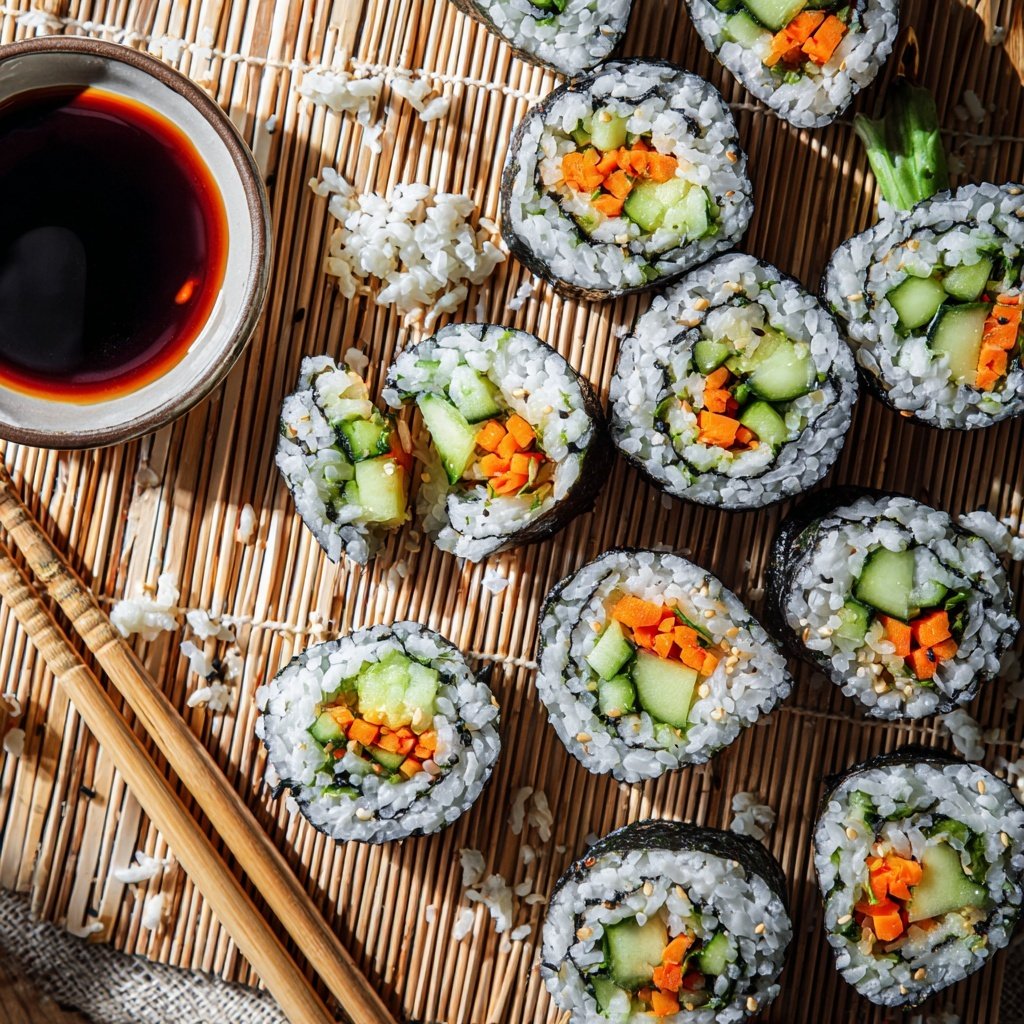
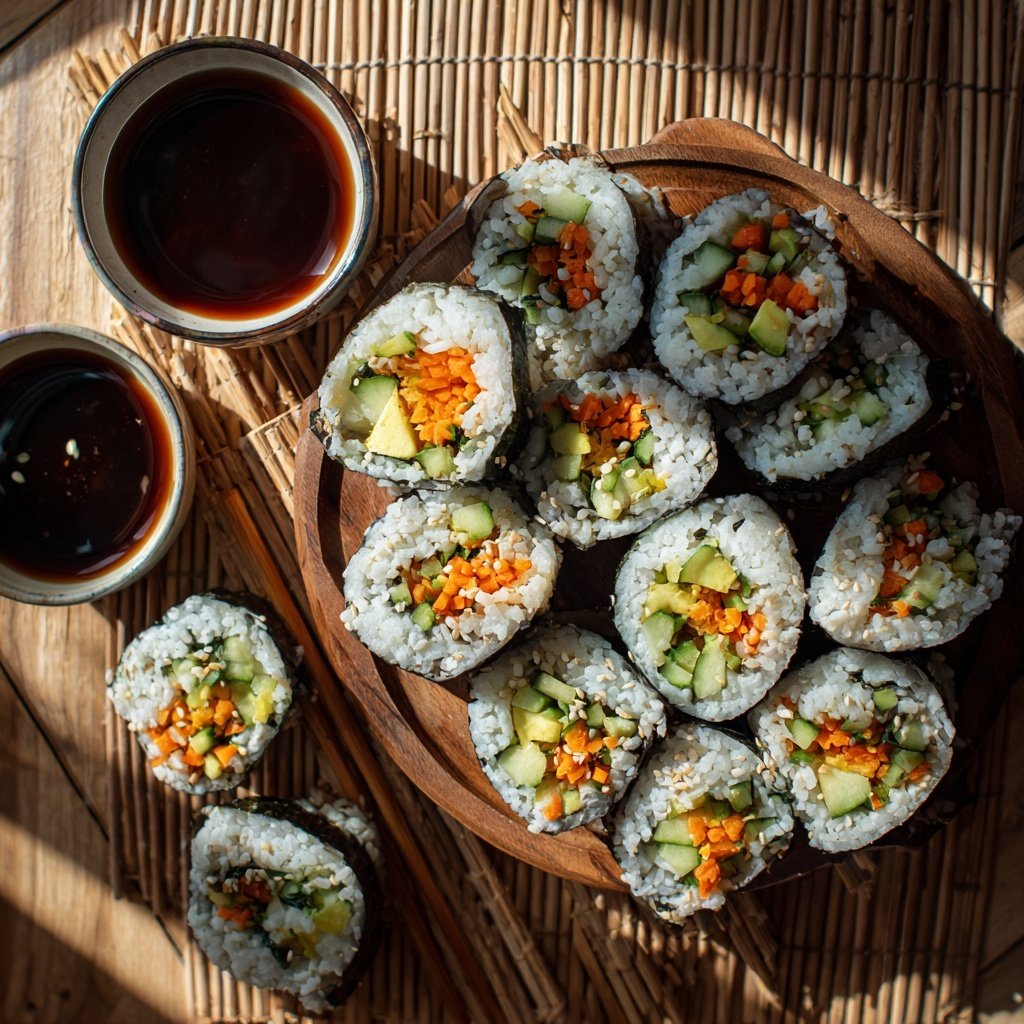
Using a sharp, wet knife, slice the roll into bite-sized pieces. Sprinkle with sesame seeds and serve with soy sauce.
Enjoy your homemade sushi rolls!
Pro Tips
- For an added kick, include a touch of wasabi in the filling or provide it on the side. Always remember to keep everything fresh for the best taste.
Scaling Your Sushi Rolls
If you’re planning a gathering, this recipe is easily scalable. Simply multiply the quantities based on the number of people you're serving. One cup of sushi rice generally yields about 3-4 rolls, so adjust your rice accordingly. Keep in mind that the nori and vegetables will need to increase proportionally as well. This method ensures everyone can enjoy these delightful rolls without running short.
For those new to sushi making, it might be helpful to start with a small batch before tackling a larger quantity. This allows you to refine your technique and experiment with different fillings without feeling overwhelmed. Once you’re comfortable, invite some friends over to join in on the rolling—it can be a fun, interactive activity!
Vegetarian Variations
If you're looking to diversify your sushi roll ingredients while keeping it vegetarian, consider adding ingredients like marinated tofu, roasted sweet potatoes, or even mango slices for a sweet touch. These variations not only bring unique flavors but also complement the fresh veggies beautifully, offering a delightful fusion experience.
Don’t restrict the fillings to the ones listed; experiment with whatever fresh produce you have on hand. Seasonal ingredients can significantly alter the taste and vibe of your rolls. For example, in the summer, fresh herbs like basil or mint can be a refreshing addition, while in fall, roasted vegetables like squash provide a warm, comforting flavor profile.
Questions About Recipes
→ Can I use brown rice instead of sushi rice?
Yes, you can use brown rice, but the texture will be different. It may require additional cooking time.
→ How can I prevent the sushi roll from falling apart?
Make sure to pack the fillings tightly and roll firmly without excessive pressure, and use a little water to seal the edges.
→ What other fillings can I use?
You can add a variety of ingredients like mango, cream cheese, or cooked shrimp for added flavor.
→ How should I store leftover sushi?
Wrap the rolls tightly in plastic wrap and refrigerate. Consume within a day for the best quality.
Veggie-Loaded Sushi Rolls
Created by: The Chefkennethcooks Team
Recipe Type: Healthy Recipes | Good Food
Skill Level: Intermediate
Final Quantity: 4 rolls
What You'll Need
Sushi Ingredients
- 2 cups sushi rice, cooked and cooled
- 4 sheets nori (seaweed)
- 1 cucumber, julienned
- 1 carrot, julienned
- 1 avocado, sliced
- 1 red bell pepper, julienned
- Sesame seeds, for garnish
- Soy sauce, for dipping
How-To Steps
Lay down your bamboo sushi mat and place a sheet of plastic wrap on top. This will help prevent the rice from sticking.
Place a sheet of nori on the mat, shiny side down. Wet your hands and take a handful of sushi rice, spreading it evenly over the nori, leaving a 1-inch border at the top.
Layer your chosen vegetables across the bottom of the rice-covered nori. Be generous, but don’t overfill!
Using the bamboo mat, start rolling the sushi away from you, pressing firmly to ensure a tight roll. Roll it up until the edge of the nori seals against the rice.
Using a sharp, wet knife, slice the roll into bite-sized pieces. Sprinkle with sesame seeds and serve with soy sauce.
Extra Tips
- For an added kick, include a touch of wasabi in the filling or provide it on the side. Always remember to keep everything fresh for the best taste.
Nutritional Breakdown (Per Serving)
- Calories: 250 kcal
- Total Fat: 5g
- Saturated Fat: 1g
- Cholesterol: 0mg
- Sodium: 10mg
- Total Carbohydrates: 47g
- Dietary Fiber: 5g
- Sugars: 3g
- Protein: 6g